

MEd in Educational Studies New England campus experience

Experienced professors
Career-relevant curriculum
Academic and career support
Program Overview Why get a master’s in educational studies at SNHU?
Whether you’re an experienced educator or a professional in another field, the Master of Education (MEd) in Educational Studies at Southern New Hampshire University prepares you to take on new opportunities in the evolving world of education. This non-licensure graduate program is ideal if you want to advance your career in a role that doesn't require teacher certification. You’ll gain a stronger foundation in educational theory and best practices, develop leadership skills, and learn to create a more effective and engaging learning environment for all students.
Skills you’ll learn:
- How to connect key concepts across education and related fields
- Use of inquiry and reflection to guide student learning
- Application of technology to support learning and collaboration
- How to develop immersive learning environments
- Recognizing how culture and tradition shape education systems
- Ethical, professional and effective leadership qualities
Note: This program does not lead to teacher licensure.

Courses & Curriculum Learn new lessons with graduate education courses
In the educational studies master’s program, you’ll explore techniques and methodologies that apply to every learner, no matter their needs. Through engaging courses and real-world experience, you’ll learn how to turn educational theory into practical strategies that create inspiring learning environments and spark student curiosity. Then, you’ll finish your program with practicum where you'll apply your skills in the field — before you graduate.
Learn from instructors with industry experience
Our faculty members bring with them decades of knowledge and experience, which informs the development of SNHU’s courses and curriculum. They look forward to supporting your journey both in the classroom and as you work toward a career in your field.
Audrey Rogers
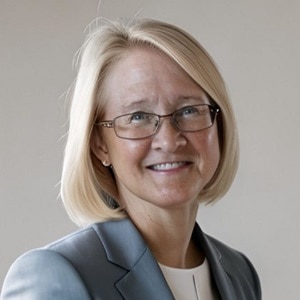
Position
Associate Dean for Graduate Education Programs
Joined SNHU
2007
Education
- EdD in Leadership and Learning from Rivier College
- MA in History from the University of New Hampshire
- MEd in Curriculum and Instruction from the University of Massachusetts, Lowell
- BA in History from Tufts University
Dr. Audrey Rogers is the associate dean for graduate education programs and professor of education at Southern New Hampshire University. She holds New Hampshire licensure as a social studies educator (grades 5-12) and as a digital learning specialist (K-12). She is past president and current member of the NH IHE (Institutions of Higher Education) Network, a consortium of all NH educator preparation programs. Her recent research focused on competency-based education and assessment literacy in preservice educators.
To learn more about SNHU faculty, visit our campus faculty page.
Campus major courses
You’ll take major courses that provide you with a solid foundation in your area of study – in some cases featuring experiential or project-based learning opportunities, labs, simulations and internships. These courses will allow you to learn a wide variety of topics and help prepare you for a role in your desired field.
Courses may include:
Visit the course catalog to view the full MEd in Educational Studies curriculum.
Admission Requirements
Acceptance decisions are made on a rolling basis throughout the year. To apply, submit the following requirements.
- Application
- Official college transcripts
- Undergraduate and Graduate transcripts required for MEd
- Resume
If you have any questions, please contact the Office of Graduate Admission 603.645.9688 | gradadmission@snhu.edu.
Can't wait? You don't have to!
Whether you’re looking to continue your education locally or traveling across the world to experience SNHU, you can apply now. We can’t wait to meet you!
Have questions? Visit our Contact Us page.
Career Outlook What can I do with an educational studies MEd?
While many MEd degree holders continue to work as educators, there are a lot more opportunities to use your non-licensure MEd in Educational Studies outside the K-12 classroom. You could choose to become a leader in your school or district and even have an impact on the education system itself. Or you could go to work in the corporate or nonprofit sector in a number of roles related to educational training, leadership or advocacy. You may also wish to use your master's degree as a jumping-off point toward a doctorate in educational leadership.
Career paths include:
- Educator
- Materials writer
- Education policy analyst
- Instructional designer
- Training and development manager

Median annual wage nationally for training and development managers in May 2024, according to the U.S. Bureau of Labor Statistics.1
Understanding the numbers
When reviewing job growth and salary information, it’s important to remember that actual numbers can vary due to many different factors—like years of experience in the role, industry of employment, geographic location, worker skill and economic conditions. Cited projections are based on Bureau of Labor Statistics data, not on SNHU graduate outcomes, and do not guarantee actual salary or job growth.

Campus Student Experience So, what’s it like taking classes on campus?
Earning your MEd on campus at SNHU provides you with uniquely hands-on opportunities you may not get elsewhere. In addition to small class sizes, exceptional student support services and modern facilities, you'll also have a practicum course – Advanced Field Studies – so you can put the skills you've learned into practice. Through a variety of experiences in local public schools, this course prepares you for real-world scenarios in and outside of the classroom.

Student support
At SNHU, you'll never have to worry about feeling alone. Here, you’ll have help from your advisors, access to tutoring and office hours, career coaching, and mental health services so you can do your best and feel your best.
Additionally, our Office of Diversity Programs, International Student Services and Campus Accessibility Center make campus an inclusive place for everyone. Visit our Student Services page to learn more about our support offerings.

Small class sizes
With small class sizes, you’ll learn in an environment where professors with real world experience know you by name.
Here, you’re not getting lost in giant lecture halls, but instead, actively participating in thoughtful dialogue where you’re always encouraged to collaborate with your peers and ask questions when they arise.
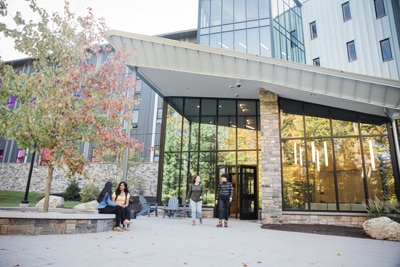
State-of-the-art facilities
Our 300-acre campus has everything you need. From technology-advanced classroom settings to your dorms complete with fitness centers and hangout spots, our goal is to give you the best college experience possible.
Whether you’re learning in a classroom, in a lab, on the field, or in your field, you’ll have what you need to be successful from the moment you wake up to the moment you close your textbooks.
Hear from us
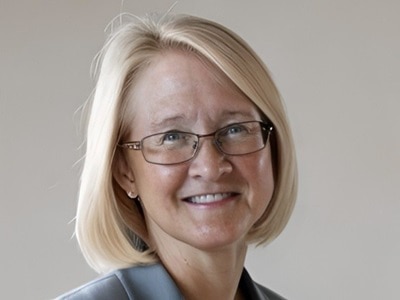
We offer a dynamic range of programs designed to support your career advancement through transformative educational experiences. Our offerings provide practical, hands-on learning, professional networking opportunities and a strong sense of community fostered by our cohort model.
Audrey Rogers, Associate Dean, Graduate Education Programs
Accreditations
SNHU is accredited by the institutional accreditor the New England Commission of Higher Education (NECHE). The university also carries specialized accreditations for some programs.

Sources & Citations
1Bureau of Labor Statistics, U.S. Department of Labor, Occupational Outlook Handbook, on the internet, at https://www.bls.gov/ooh/management/training-and-development-managers.htm (viewed Nov. 10, 2025).
Cited projections may not reflect local and/or short-term economic or job conditions and do not guarantee actual job growth.